




















































Buying kitchen appliances is one of the biggest single purchases you'll make for your home, and one of the easiest to get wrong. Order the wrong depth of refrigerator, and it won't fit the cabinet opening. Mismatch finishes and your new kitchen looks like it was assembled from three different showrooms. Buy everything one piece at a time, and you'll pay more than you need to.
That's why this kitchen appliance buying guide exists. Whether you're planning a full kitchen remodel or simply replacing a broken range, knowing how to choose kitchen appliances that fit, match, and perform well starts with understanding your options before you shop.
This guide walks through exactly how to pick a range, refrigerator, dishwasher, range hood, and microwave that work together and highlights which kitchen appliance brands are worth your money in 2026.
Wherever it makes sense, we'll point you toward the smarter way to buy: a matched kitchen appliance package. At Home Outlet Direct, that's our model: bundle and save on the same trusted brands you'd find anywhere else, minus the markup.
What Counts as a Major Kitchen Appliance?
"Major appliances" is the industry term for the big-ticket items that get built into your kitchen's layout and utilities, as opposed to countertop tools like blenders or toasters. The core list includes:
- Range or cooktop + oven: Your primary cooking source
- Refrigerator: Food storage, the largest footprint in the room
- Dishwasher: Built into the cabinetry, with plumbing and wiring behind it
- Range hood/ventilation: Required for proper airflow, especially with gas
- Microwave: Built-in, drawer, or over-the-range
Everything else (wine coolers, ice makers, warming drawers, garbage disposals, etc.) falls into the "nice to have" category. Get the core five right first, then layer in extras as your budget allows. These five categories are also the backbone of any kitchen remodel appliances checklist, since they're the pieces tied to plumbing, gas lines, and electrical work.
Buying Appliances Individually vs. as a Package: Which Saves More?
This is the question that decides your final bill. Buying appliances one at a time gives you maximum flexibility to mix and match brands. However, you lose out on volume pricing, and you're on your own to make sure everything fits together in terms of finish and style.
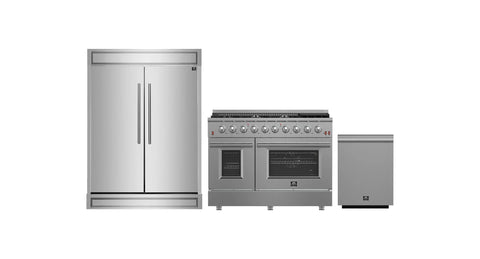
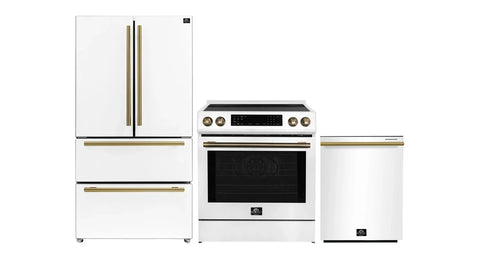
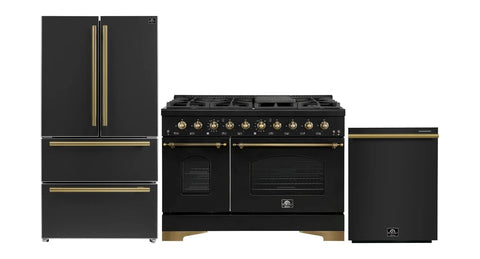
Buying as a package almost always costs less per unit, ships together, and guarantees a cohesive look from day one. A range-refrigerator-dishwasher package is the single most common kitchen appliance package configuration, and this is why bundling is the default move for most kitchen remodel appliance shopping lists.
Here’s a breakdown of the pros and cons of buying appliances individually vs. as a package:
|
Buying Individually |
Buying as a Package |
|
|
Price |
Full retail on each piece |
Bundled discount, often 15–30% off combined retail |
|
Finish matching |
You have to check each spec sheet yourself |
Pre-matched finish and style across every piece |
|
Shipping |
Multiple deliveries, multiple freight charges |
Often ships together, fewer delivery windows |
|
Warranty tracking |
Separate warranty per brand/piece |
Simplified; often same manufacturer, same terms |
|
Flexibility |
Full control over brand-mixing |
Limited to package configurations (though most come in 2-, 3-, 4-, 5-, and 6-piece options) |
|
Best for |
Replacing a single broken appliance |
Remodels, new builds, full kitchen refreshes |
If you're outfitting a whole kitchen, a package is the more cost-effective path almost every time. Home Outlet Direct's appliance packages come in 2-piece through 6-piece configurations across 30", 36", 48", and 60" sizing, so you can bundle exactly what your kitchen needs without paying for pieces you don't.
Shop Kitchen Appliance Packages
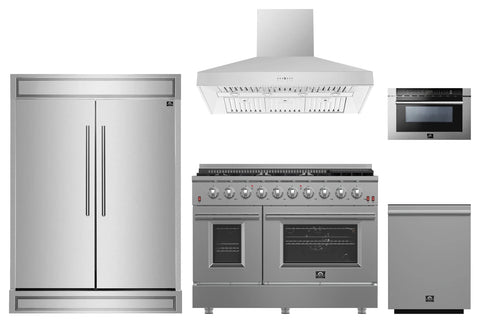
Most kitchens land in one of two sweet spots: a 3-piece package (range, refrigerator, and dishwasher) for a straightforward remodel, or a 4-piece package that adds a hood or microwave for full coverage.
The Core Kitchen Appliances You Need (And How to Choose Them)
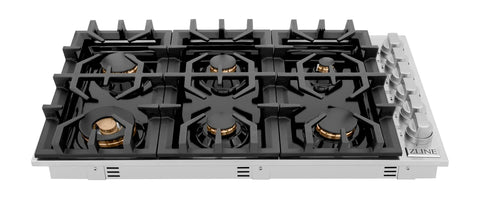
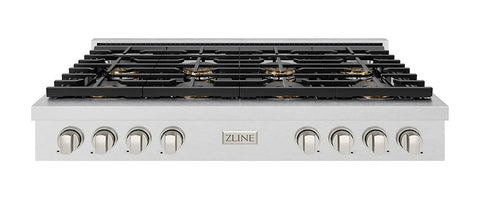
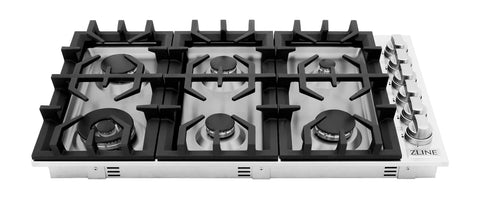
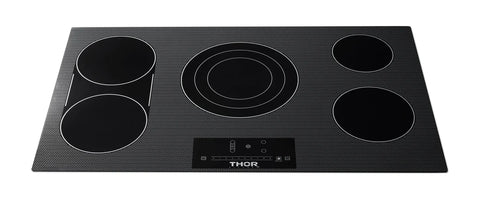
Ranges & Cooktops
Your range is the anchor of the kitchen, both functionally and visually. The first decision you need to make is fuel type:
- Gas ranges heat up instantly and give you precise flame control, making them the preferred choice for anyone who cooks often.
- Electric ranges are simpler to install (no gas line required) and easier to clean.
- Dual-fuel ranges pair a gas cooktop with an electric convection oven. This gives you the best of both, albeit at a higher price point.
- Induction ranges heat the cookware directly, offering the fastest boil times and the easiest cleanup, but require induction-compatible pots and pans.
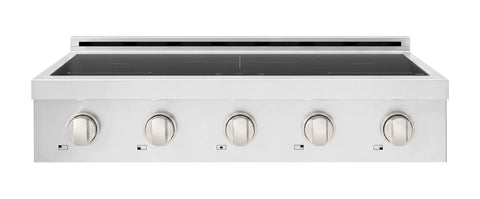
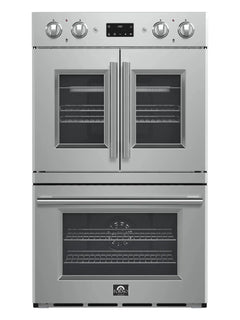
If you're short on cabinet space or want the cooktop and oven separated (cooktop on the island, oven built into a wall), look at a standalone cooktop plus wall oven combo instead of a single range.
Sizing note: Ranges commonly come in 30", 36", and 48" widths. Match the width to your existing cabinet cutout to prevent the hassle of returning an item.
Refrigerators
When you’re choosing a refrigerator, you need to consider three things: configuration, capacity, and depth.
For configurations, you can choose from:
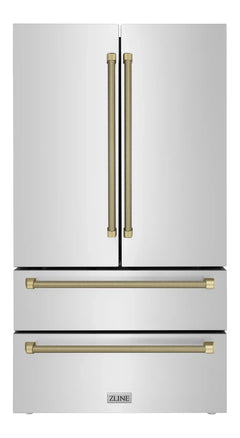
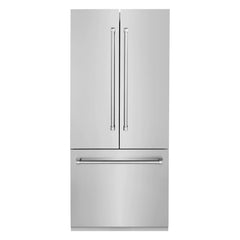
- French door refrigerators offer wide shelving and are the most popular configuration for families.
- Side-by-side models are narrower and easier to fit into tight kitchens.
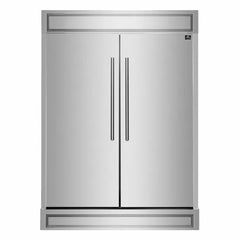
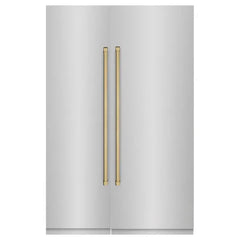
- Column refrigerators (separate fridge and freezer columns) offer a built-in, high-end look, but require precise cabinetry planning.
- Freestanding units are the easiest to install and swap out later;
- Built-in units sit flush with cabinetry for a custom look but need more exact measurements.
Not sure what capacity you need? Aim for roughly 4–6 cubic feet of fridge capacity per household member as a starting rule of thumb.
Dishwashers
Dishwashers are judged mainly on:
- Noise level: Measured in decibels (dBA). Lower numbers are quieter. Modern dishwashers usually have a noise level of 38–50 dBA.
- Rack configuration: All dishwashers will have a top and bottom rack, but some models may add a 3rd rack for items like flatware or utensils.
- Cycle type/mode: Different models have different types and numbers of modes, including speciality cycles like delicate mode or rinse mode.
A third rack for utensils and a stainless interior (versus plastic) both make a noticeable difference in daily use and long-term durability.
Like most stainless steel kitchen appliances, a stainless steel tub also resists odor and staining better than plastic over time. The standard dishwasher width is 24"; if you're tight on space, 18" slimline models exist but hold noticeably less.
Range Hoods & Ventilation
Ventilation gets skipped or underestimated more than any other kitchen appliance decision, but that’s a mistake.
A hood's job is measured in CFM (cubic feet per minute). As a baseline, take your range's total BTU output and divide by 100 to get the minimum CFM you need; gas ranges and high-BTU burners need more airflow than electric.
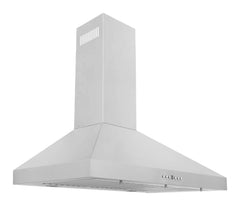
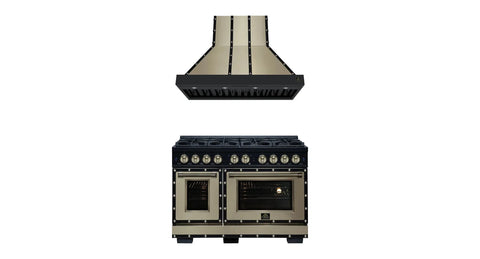
Hood styles include wall mount, under-cabinet, island, ceiling, and insert versions (for custom cabinetry builds). You can also get ductless/recirculating options for kitchens without external venting. Match the hood width to your range width. For instance, a 36" range needs at minimum a 30–36" hood to properly capture smoke and grease.
Microwaves
These days, microwaves come in four formats:
- Countertop
- Built-in
- Over-the-range (which doubles as a light/vent source)
- Drawer models that tuck into a lower cabinet for a cleaner sightline.
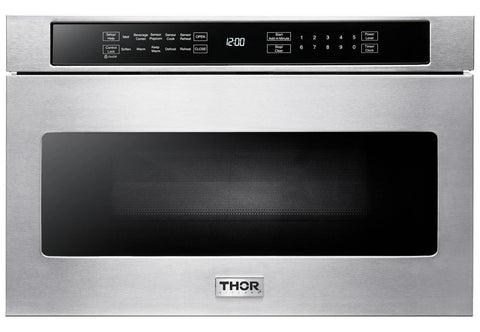
If you're already installing a dedicated range hood, a drawer or built-in microwave keeps your wall space clean. Over-the-range units are the budget-friendly two-in-one option.
Matching Your Kitchen Appliances: Finish, Style & Brand Consistency
Matching kitchen appliances by finish is what makes a kitchen look intentional rather than assembled piecemeal. Here are a few rules to keep it simple:
- Pick one finish family and stick to it. Stainless steel kitchen appliances remain the most popular and easiest to match, but black stainless and matte black each look very different under kitchen lighting. Mixing finish families is the most common visual mistake.
- Match the brand where you can. Manufacturers design ranges, hoods, and refrigerators within a line to share handle styles, knob finishes, and trim details. A ZLINE range next to a ZLINE hood in the same finish will always look more cohesive than mixing brands, even if the individual finish names match on paper.
- Decide on hardware accents early. Trim details like brass, champagne bronze, or matte black hardware (offered across collections like ZLINE's Autograph Edition or Forno's Espresso line) should be chosen once and applied consistently. Pick your accent metal before you order anything.
- Package deals make matching easy. Buying a pre-matched package is the easiest way to guarantee finish and style consistency without cross-referencing spec sheets yourself.
Measuring & Fit: Avoiding Costly Mistakes
Before you place any order, measure these four things:
- Cabinet opening width, height, and depth: For the range, dishwasher, and built-in refrigerator or microwave.
- Door swing and walkway clearance: Make sure the refrigerator door and dishwasher door can fully open without hitting an island or cabinet.
- Ceiling height and hood mounting distance. Most range hoods need 24"–36" of clearance above the cooktop; check your specific model's spec sheet to confirm.
- Utility hookups: Confirm gas line, 240V electrical, and water line locations match your chosen appliances' requirements, especially if you're switching fuel types (electric to gas or vice versa).
Rule of thumb: Always order based on the cutout measurement, not the appliance you're replacing. Old appliances were sometimes installed with shims or nonstandard clearances that won't show up until the new one doesn't fit.
Key Features Worth Paying For
Shopping for kitchen appliances presents you with a dazzling array of upgrades and extra features. So which are worth the extra money? Depending on your budget and cooking preferences, we recommend:
- Convection ovens: More even heat and faster cook times than standard bake.
- Self-cleaning cycles: A genuine time-saver on ranges and wall ovens.
- Third rack on dishwashers: Extra utensil capacity that gets used daily.
- Higher CFM range hoods: Worth the upgrade if you cook with gas or high heat often.
- Smart/Wi-Fi connectivity: Useful for remote preheat and monitoring, but not essential.
- Counter-depth refrigerators: A flush, built-in look for a modest premium over standard depth.
Skip paying extra for features you won't use, like touchscreen displays on a range you'll mostly control with basic knobs.
How Much Should You Budget for a Full Kitchen?
The budget for a full kitchen varies widely by brand tier and package size.
To get you started, here's a general range for a 3- to 4-piece package (range, refrigerator, dishwasher, and hood or microwave).
Getting the best kitchen appliances for your budget is less about spending the most and more about matching the tier to how you actually cook:
|
Tier |
Typical Package Price Range |
What to Expect |
|
Value |
$3,000 – $5,000 |
Solid stainless steel finishes, standard features, and reliable performance |
|
Mid-range |
$5,000 – $9,000 |
Larger sizing (36"–48"), convection ovens, upgraded finishes, and higher-CFM hoods |
|
Premium |
$9,000 – $16,000+ |
Pro-style ranges, designer trim collections (brass, bronze accents), built-in refrigeration, and 60" configurations |
Buying as a bundle typically shaves a meaningful percentage off these numbers compared to piecing the same kitchen together individually. This can often mean the difference between a mid-range and a premium-tier kitchen for the same spend.
Shop Appliance Packages on Sale for current markdowns across every tier.
Best Kitchen Appliance Brands to Consider
Not all kitchen appliance brands are created equal. Some focus on pro-style performance, while others are more about design. Here are three of the best kitchen appliance brands worth shortlisting in 2026:
ZLINE

ZLINE built its name on professional-style ranges and range hoods with residential-friendly price points. Known for bold color and finish options, ZLINE is a strong pick if you want a designer look without custom pricing. For example, ZLINE offers the Autograph Edition line with champagne bronze, matte black, and gold hardware accents
Thor Kitchen

Thor Kitchen focuses on pro-style performance. You get high-BTU burners, commercial-grade grates, and dual-fuel ranges built for serious home cooks. The brand's collaboration collections add a design layer on top of that performance-first foundation.
Shop Thor Kitchen Appliance Packages
Forno

Forno leans into old-world Italian styling: antique brass trim, French door ovens, and warm finish palettes like the Espresso line in white or black with brass accents. It's a great fit if you want a kitchen that feels more custom and less catalog.
All three brands are available at Home Outlet Direct as standalone appliances or pre-matched packages, alongside other brand options like Kucht and Cosmo.
Common Kitchen Appliance Buying Mistakes to Avoid
Even with a solid plan, it's easy to make an avoidable error when shopping for kitchen remodel appliances. Watch for these:
- Ordering by the old appliance's size instead of the actual cutout measurement.
- Mixing finishes without checking them side by side. Stainless tones, for instance, vary by manufacturer.
- Underpowering the range hood relative to the range's BTU output.
- Forgetting utility compatibility. Before you commit to a package, consider gas line availability, 240V outlets, and water lines for fridges and ice makers.
- Buying appliances one at a time during a remodel, missing out on bundle pricing and finish matching.
- Skipping the warranty and delivery details until after you’ve placed the order.
Why Buy Your Kitchen Appliances from Home Outlet Direct?
Home Outlet Direct is an authorized dealer for ZLINE, Thor Kitchen, Forno, Kucht, Cosmo, and more. Why should you buy from an authorized dealer? Because every appliance you buy carries full manufacturer warranty coverage.
Beyond the brand selection, here's what makes shopping with us the easiest way to outfit a kitchen:
- Bundle and save on 2- to 6-piece packages across 30", 36", 48", and 60" sizing, pre-matched by finish and style.
- Free shipping on all orders.
- 30-day easy returns if something isn't right.
- Real expert advice. Live chat or call in at 800-495-0144 to talk through sizing, fit, or brand questions before you buy.
- Financing options to spread out the cost of a full kitchen refresh.
- Builder and military discount programs for pros and service members outfitting multiple kitchens or looking for extra savings.
Whether you're replacing one appliance or building out an entire kitchen from scratch, buying as a bundle through Home Outlet Direct is consistently the lower-cost, lower-hassle path.
Final Checklist Before You Buy
- Measured cabinet openings for range, refrigerator, dishwasher, and microwave
- Confirmed door swing and walkway clearance
- Checked ceiling clearance and CFM needs for the range hood
- Verified gas, electrical, and water hookups match your chosen appliances
- Picked one finish family and one accent metal across all pieces
- Compared individual pricing against a matched package
- Confirmed warranty terms and return window
- Set a budget tier (value, mid-range, or premium) before browsing
FAQs About Buying Kitchen Appliances
Is it cheaper to buy kitchen appliances as a package?
In most cases, yes. A kitchen appliance package is typically discounted compared to buying each piece individually, and it guarantees finish and style consistency across your kitchen.
What comes in a range-refrigerator-dishwasher package?
A standard range-refrigerator-dishwasher package includes the three appliances tied to gas, water, and electrical hookups. Many packages add a range hood or microwave as a 4-piece option.
What size range hood do I need?
Match the hood width to your range width at a minimum, and check that its CFM rating meets or exceeds your range's BTU output divided by 100. Gas ranges generally need more airflow than electric ones.
Should I match all my appliances to the same brand?
It's not required, but it makes finish-matching far easier since manufacturers design trim and hardware to coordinate within their own product lines.
How long does it take to receive a full kitchen appliance package?
Delivery timing depends on the brand and configuration. Some ship together, while others arrive in separate shipments. Check estimated lead times on the product page, or contact support for a firm timeline before ordering.
What's the difference between counter-depth and standard-depth refrigerators?
Counter-depth refrigerators sit flush with your countertops for a built-in look, typically holding slightly less capacity than standard-depth models of the same width.
Do I need a professional to install my new appliances?
Gas ranges, dishwashers, and built-in refrigerators typically require a licensed installer to handle gas, water, and electrical connections safely. Freestanding electric ranges and countertop microwaves are more DIY-friendly.
Comments
0 comments