
























































































Updated October 2026
The difference between manual, automatic and super-automatic espresso machines is how much of the work the machine does for you. With a manual (also called semi-automatic) machine, you grind, dose and tamp the coffee and steam the milk yourself, while an electric pump supplies the brewing pressure. An automatic machine grinds fresh beans and brews at the touch of a button, and you froth milk with its steam wand. A super-automatic machine does all of that and froths the milk for you, so cappuccinos and lattes take one touch. Capsule machines, such as Nespresso, brew from pre-filled pods instead of beans.
Brands don't all use these words the same way. De'Longhi, for example, calls every bean-to-cup machine "fully automatic," whether or not it froths milk on its own. On our site, we sort bean-to-cup machines by their milk system, so you can find one-touch milk drinks quickly. Here's how each type works and how our espresso machine collections are organized.
Espresso Machine Types at a Glance
| Manual (semi-automatic) | Automatic (bean-to-cup) | Super-automatic (bean-to-cup with automatic milk) | Capsule | |
|---|---|---|---|---|
| Grinding | You, with a separate grinder or a built-in one on some models | Built-in grinder | Built-in grinder | None; the capsule holds pre-ground coffee |
| Dosing and tamping | You | The machine | The machine | None |
| Milk | Steam wand; a few models texture milk automatically | Steam wand you use with a pitcher | Automatic milk system (such as LatteCrema) for one-touch milk drinks | Separate frother, or a built-in milk system on Lattissima models |
| Learning curve | Highest | Low (some practice for milk) | Lowest for milk drinks | Lowest |
| Routine care | Rinse the portafilter, purge and wipe the steam wand, descale | Empty the grounds container, wipe the steam wand, descale | Empty the grounds container, clean the milk system, descale | Empty used capsules, descale |
| Examples we carry | De'Longhi Stilosa, Dedica, La Specialista; KitchenAid Semi-Automatic | De'Longhi Magnifica Evo; KitchenAid KF2; Espressione Concierge Elite | De'Longhi Dinamica, Eletta Explore, Rivelia, Magnifica Evo with LatteCrema; KitchenAid KF3, KF7, KF8 | Nespresso by De'Longhi Vertuo, Essenza Mini, CitiZ, Lattissima |
What Is a Manual Espresso Machine?
A manual espresso machine gives you control over each step of the shot. De'Longhi describes its manual machines as a hands-on approach where you adjust the grind size, tamping pressure and extraction time to suit your taste. You grind and dose the coffee into the portafilter, tamp it, lock it in and start the shot. The machine's electric pump and heating system handle the water pressure and temperature.
Many retailers and brands call this same kind of machine "semi-automatic." KitchenAid, for example, sells its model as the KitchenAid Semi-Automatic Espresso Machine with Burr Grinder, while De'Longhi files the Stilosa, Dedica and La Specialista lines under "manual." Both labels describe a pump machine where you make the key decisions.
Manual machines range from compact models such as the De'Longhi Stilosa and the Dedica series to La Specialista models such as the La Specialista Arte Evo, which add a built-in burr grinder. Most have a steam wand for frothing milk, and a few, such as the Dedica Maestro Plus with what De'Longhi calls an automatic steam wand, help with milk texturing too. Browse the full range in our De'Longhi manual espresso machines collection.
What about lever machines?
Lever machines are the original "manual" espresso machines. You pull a lever that drives hot water through the coffee, either directly by hand or through a spring. They are a niche choice for enthusiasts. The De'Longhi Stilosa, Dedica and La Specialista lines all use an electric pump instead, so there is no lever to pull.
Good for: People who enjoy the process and want to fine-tune grind, dose and milk texture. If you like the idea of learning latte art or dialing in a new bag of beans, a manual machine gives you the most control.
What Is an Automatic Espresso Machine?
"Automatic" is the most loosely used word in espresso shopping. Some guides use it for a pump machine that stops the shot at a preset volume while you still grind and tamp, and De'Longhi uses it for its whole bean-to-cup range. On our site, an automatic espresso machine is a bean-to-cup machine that grinds, doses, tamps and brews at the touch of a button, while you froth milk yourself with a steam wand.
The De'Longhi Magnifica Evo is a good example: it makes espresso and coffee from fresh beans with one touch and has a manual frother for milk. The KitchenAid KF2 and the Espressione Concierge Elite work the same way. Their makers call them "fully automatic," and we list them as automatic because the milk is up to you.
Good for: People who want fresh-bean espresso without grinding and tamping, and who drink mostly espresso and coffee or enjoy steaming their own milk.
What Is a Super-Automatic Espresso Machine?
A super-automatic machine does the whole job from whole beans to a finished milk drink. It grinds, doses and tamps the beans inside the brewing unit, brews the shot, drops the used grounds into an internal container and froths milk automatically. De'Longhi describes its bean-to-cup machines as preparing "espresso drinks from fresh beans at the touch of a button."
The milk system is what sets these machines apart on our site. De'Longhi's LatteCrema system, found on models such as the Magnifica Evo with LatteCrema, the Dinamica Plus, the Eletta Explore and the Rivelia, draws milk from a container, froths it and pours it into your cup. KitchenAid's KF3 does the same with its milk hose, and the KF7 and KF8 come with a milk container.
Shop the range in our De'Longhi super-automatic espresso machines and KitchenAid espresso machines collections.
Good for: Households that want café-style cappuccinos and lattes from fresh beans without learning barista skills. They're especially handy if you make several milk drinks a day or serve guests.
What Is a Capsule Espresso Machine?
A capsule machine brews from a sealed, pre-filled capsule instead of whole beans. You insert a capsule, press a button and the machine brews. There's no grinding, dosing or tamping, and cleanup is as simple as emptying the used capsules.
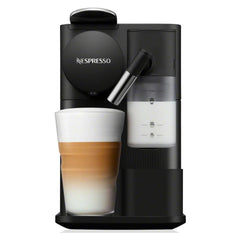
Our capsule machines are Nespresso by De'Longhi models. Vertuo machines make both espresso and larger coffees from Vertuo capsules, while Original-line machines such as the Essenza Mini, CitiZ and Inissia use Original capsules. Some are sold as bundles with an Aeroccino milk frother. Lattissima models, such as the Lattissima One, Gran Lattissima and Vertuo Lattissima, add a built-in milk system for one-touch cappuccinos, and we list them with our other capsule machines. You'll find all of them, along with the Magnifica Evo, in our De'Longhi automatic and capsule espresso machines collection.
Good for: Anyone who wants consistent espresso in seconds with almost no cleanup and is happy using capsules instead of fresh beans.
How Milk Frothing Works on Each Type
Milk is where the types differ most in daily use, so it helps to know the options:
- Steam wand: The machine sends steam through a wand that you dip into a pitcher of milk. The steam heats and aerates the milk, and you control the texture. Manual and automatic machines use one. De'Longhi uses names such as the My LatteArt steam wand or the manual frother for its versions.
- Automatic milk system: The machine draws milk from a container, froths it and dispenses it into your cup. This is what makes a machine super-automatic on our site. De'Longhi's version is called LatteCrema.
- Separate frother: A standalone frother heats and foams milk on its own. Nespresso bundles often include an Aeroccino, and De'Longhi also makes countertop milk frothers.
Which Type Should You Choose?
- Choose manual if you want control and enjoy the craft, and you have a little time for practice each morning.
- Choose automatic if you want fresh-bean espresso at a touch and don't mind steaming your own milk.
- Choose super-automatic if you want cappuccinos and lattes from fresh beans with one touch.
- Choose capsule if speed and simplicity matter most and you don't mind using capsules.
Whichever type you choose, plan on regular descaling. Mineral scale from water builds up inside espresso machines over time. De'Longhi recommends its own descaler, the De'Longhi Decalk Care descaler (DLSC500), for all its coffee makers, and our guide to rinsing and descaling De'Longhi espresso machines walks through the process. Always follow the descaling steps in your machine's manual.
The Bottom Line
Manual machines put you in charge of grinding, tamping and frothing. Automatic machines grind and brew fresh beans for you while you steam the milk. Super-automatic machines handle the milk too, for one-touch cappuccinos and lattes. Capsule machines brew from pods with almost no cleanup. Once you know how much of the process you want to handle, the right machine is easy to narrow down.
For tips on getting started with your new machine, read How to Use a De'Longhi Espresso Machine, or browse all De'Longhi espresso machines.
Comments
0 comments