

























































































Updated October 2026
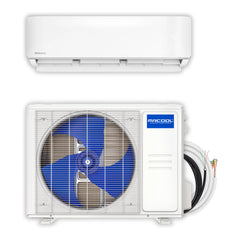
A line set is the pair of insulated copper refrigerant lines that connects the outdoor unit of a split system to the indoor unit. The smaller tube is the liquid line, and the larger tube is the suction (vapor) line. Every split system, from a ductless mini split to a central split air conditioner or heat pump, needs one, because the refrigerant moving through those lines carries heat between your home and the outdoors.
Line sets aren't one-size-fits-all. Each system calls for specific line sizes, length limits and, for pre-charged sets, a specific refrigerant. That's why it pays to choose the line set when you buy the system, rather than hoping a local supplier has the right size and configuration on the shelf.
What Is a Line Set?

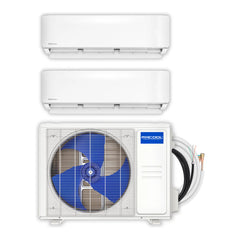
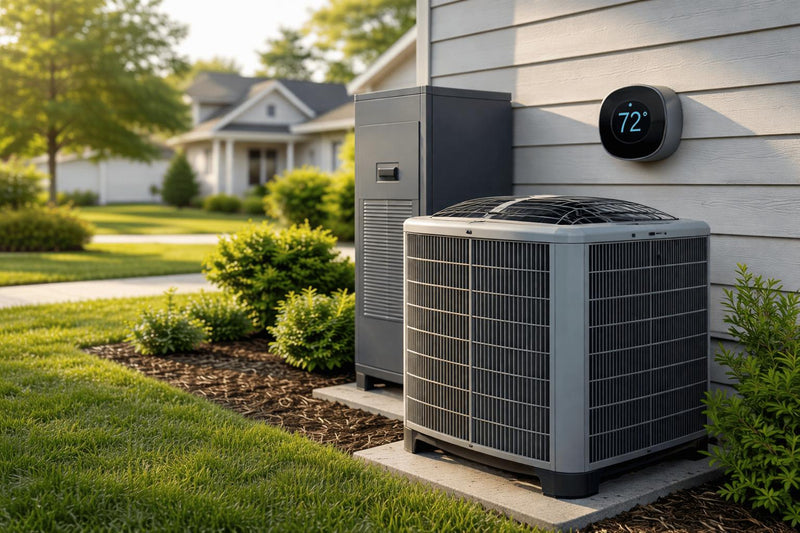
A line set is two copper refrigerant lines, each wrapped in insulation, that run between the outdoor unit (the condenser or heat pump) and the indoor unit (the air handler or evaporator coil). On a mini split, the line set usually runs alongside the communication cable that links the indoor and outdoor units, and some MRCOOL DIY line sets include that cable.
Only split systems use line sets. Packaged units, window air conditioners and PTACs keep the whole refrigerant circuit inside one cabinet, so they don't need one.
The insulation matters too. It limits heat gain or loss along the run and helps prevent condensation. MRCOOL's central ducted installation manual, for example, says to insulate both the gas and liquid piping to prevent condensation.
Liquid Line vs. Suction Line: How a Line Set Works
If you look at a line set, you'll see that one tube is bigger than the other. That's intentional, because each line carries refrigerant in a different state:
- Liquid line (the smaller tube): In cooling mode, it carries liquid refrigerant from the outdoor unit to the indoor coil.
- Suction or vapor line (the larger tube): In cooling mode, it returns low-pressure refrigerant vapor from the indoor coil to the compressor in the outdoor unit. MRCOOL's manuals call this the "gas side."
The refrigerant circulates in a closed loop, absorbing heat at one coil and releasing it at the other. No air travels through a line set. In cooling mode, the indoor coil absorbs heat from your room air and the outdoor coil releases it outside. A heat pump reverses the flow in heating mode, so it gathers heat outdoors and releases it indoors.
You may also hear the term "discharge line." That's the hot-gas tube inside the outdoor unit that runs from the compressor to the outdoor coil. It isn't part of the line set.
Line Set Sizing: Follow Your Installation Manual

Line sets are sized by two diameters, written as liquid line x suction line (for example, 1/4" x 1/2"). The right sizes come from the equipment's installation manual, not from a general rule based on tonnage. Two systems with the same capacity can call for different line sizes.
Here are a few examples from MRCOOL's current documentation, to show how much sizes vary:
| MRCOOL system | Line sizes (liquid x suction) |
|---|---|
| DIY 5th Gen 9K and 12K indoor units | 1/4" x 3/8" |
| DIY 5th Gen 18K indoor units | 1/4" x 1/2" |
| DIY 5th Gen 24K and 36K indoor units | 3/8" x 5/8" |
| VersaPro and Hyper Heat central ducted systems | 3/8" x 3/4" |
Sources: MRCOOL product catalog and the VersaPro and Hyper Heat central ducted installation manual. Always confirm against the manual for your exact model.
Size isn't the only spec. Manuals also set limits on:
- Maximum line length. MRCOOL's VersaPro and Hyper Heat manual, for example, allows up to 98.4 ft of piping on 18K models and up to 246 ft on 36K to 60K models. DIY multi-zone condensers have a total line set limit that varies by model.
- Maximum height difference between the indoor and outdoor units.
- Extra steps on long vertical runs, such as the oil traps MRCOOL's central ducted manual calls for on tall suction-line risers.
A line set that's the wrong size or outside these limits can reduce capacity and efficiency and cause problems with oil returning to the compressor. Installing outside the manual's requirements can also put your warranty coverage at risk.
Pre-Charged vs. Conventional Line Sets
There are two basic ways to connect a split system, and they come with very different rules about who can do the work.
Conventional (flare or braze) line sets
A conventional line set is cut to length, then flared or brazed to the units. Before the system runs, it has to be pressure-tested and evacuated with a vacuum pump, and the refrigerant charge is checked and adjusted. This is refrigerant work. Under the EPA's Section 608 rules, technicians who maintain, service, repair or dispose of equipment that could release refrigerants must be certified. MRCOOL's central ducted manual also says all field piping must be completed by a licensed technician. Plan on an EPA 608-certified HVAC pro for this kind of installation.
Pre-charged quick-connect line sets
MRCOOL makes pre-charged line sets that come from the factory already filled with refrigerant and fitted with screw-on Quick Connect valves, so no vacuum pump, brazing or field charging is needed:
- DIY Quick Connect line sets pair with MRCOOL DIY mini splits, the systems MRCOOL designs for homeowner installation. Browse MRCOOL DIY mini splits.
- No-Vac Quick Connect line sets (3/8" x 3/4") pair with MRCOOL's Universal, VersaPro and Hyper Heat central ducted condensers. See MRCOOL central split systems.
A few rules apply to every pre-charged set:
- Match the refrigerant. Pre-charged sets are charged for a specific refrigerant, either R-410A or R-454B. MRCOOL's current DIY 5th Gen and No-Vac sets are charged with R-454B, while older systems may use R-410A. Match the set to your system's model and refrigerant. Our R-454B vs. R-410A guide explains the difference.
- Don't cut it to length. The refrigerant is sealed inside, so choose the length you need. If one set isn't long enough, MRCOOL sells couplers for joining two sets.
- Follow the manual step by step, including routing, connection and leak checks after installation. Electrical work still has to meet local code, and some areas require a permit or a licensed electrician.
Our MRCOOL DIY installation guide walks through a typical DIY install. Home Outlet Direct doesn't install equipment, so line up any contractors you need before your system arrives.
How to Choose the Right Line Set
- Start with the manual. Find the liquid and suction line sizes, maximum length and maximum height difference for your exact model. MRCOOL posts its manuals in its documentation library.
- Measure the real route. Measure the path the lines will actually take, including bends and wall penetrations, not the straight-line distance.
- Match the connection type and refrigerant. Pre-charged Quick Connect sets only work with compatible MRCOOL systems, and conventional sets need a certified installer.
- Protect the outdoor run. A line set cover, such as the MRCOOL LineGuard cover kit, shields exposed lines from sun, weather and yard work.
- Buy it with the system. Ordering the line set with your equipment is the easiest way to make sure the sizes and connections match.
The Bottom Line
A line set is the refrigerant connection that makes a split system work: a smaller liquid line and a larger suction line, insulated and sized for your specific equipment. Get the sizes and length limits from your installation manual, match pre-charged sets to your system's refrigerant, and leave conventional line set work to an EPA 608-certified technician.
Shop mini split line sets, or learn more in our mini split sizing guide and our explainer on condensers and air handlers.

Comments
0 comments