



























































































Updated October 2026
In everyday use, a range and a stove are the same appliance: a cooktop on top and an oven below, combined in one unit. "Range" is the term manufacturers and retailers usually use, while "stove" is the everyday word, and some people use "stove" or "stovetop" to mean only the burners on top. So if you're shopping for a range, you're shopping for what most people call a stove.
The confusion is understandable, since we use these appliances nearly every day. Below, we explain how the two words are used, the main types of ranges, and the other cooking setups worth considering, so you know what to look for when you shop.
What Is the Difference Between a Range and a Stove?
When people are talking about the cooking appliance in a typical kitchen, there's no real difference. Both words describe a single unit that combines burners or cooking elements with an oven. The small differences are in how the words are used:
- Range: the industry term for the combined cooktop-and-oven appliance. Product listings, spec sheets and manufacturers' websites say "range," as in "36-inch gas range."
- Stove: the everyday American word for the same appliance. It's also used loosely for the cooking surface alone, as in "the pot is on the stove."
- Stovetop or cooktop: the cooking surface only, either the top of a range or a separate appliance built into the counter.
In the UK and some other countries, the same appliance is often called a "cooker."
Where the Confusion Comes From
The word "stove" is much older than the modern kitchen. For a long time, a stove often meant a heating appliance, and much of the cooking was done over an open hearth or fireplace. Wood-burning stoves are still a popular way to add a rustic heat source to a home. Over time, "stove" also became the common name for the kitchen cooking appliance, which is why "stove" and "range" are now used interchangeably.
What Is a Kitchen Range?
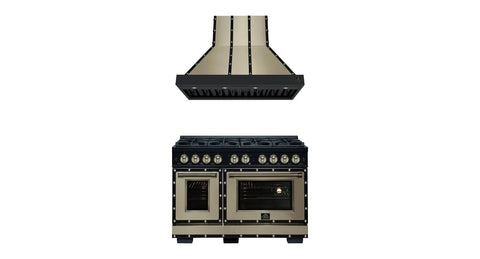
A range is the quintessential kitchen cooking appliance we picture when we think of a kitchen. It's a combination appliance with a cooktop on top and an oven below. Ranges are usually grouped by fuel type:
- Gas ranges use natural gas for both the burners and the oven, and many can run on propane with the manufacturer's conversion kit, installed by a qualified technician. Many cooks like the instant, visible flame. Browse gas ranges.
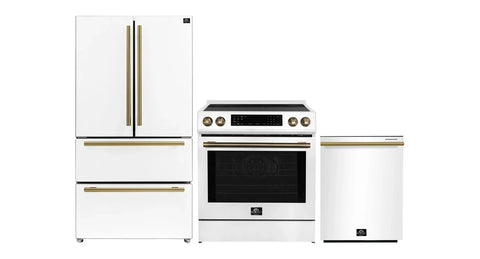
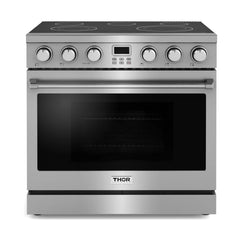
- Electric ranges use radiant elements under a smooth glass-ceramic top, plus an electric oven. The flat surface is easy to wipe clean. See electric ranges.
- Induction ranges use an electromagnetic field to heat compatible cookware directly, so the cooktop responds quickly. You'll need magnetic cookware, such as cast iron or most stainless steel. See induction ranges.
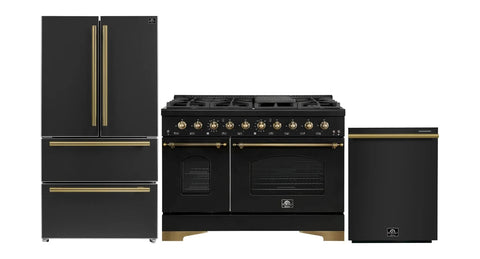
- Dual fuel ranges pair a gas cooktop with an electric oven. Many bakers prefer an electric oven for its even, consistent heat. See dual fuel ranges.
Some ranges add extras such as convection fans, griddles, double ovens or an air fry mode in the oven. For a closer look at fuel types, read our gas vs electric comparison guide and our dual fuel vs gas guide.
Freestanding vs Slide-In Ranges
Ranges also differ in how they're installed. A freestanding range has finished sides, so it can stand on its own or at the end of a run of cabinets. Many standard freestanding ranges have a backguard with controls, while pro-style freestanding ranges usually put the knobs on the front. A slide-in range is designed to sit between cabinets for a built-in look, usually with front controls and no tall backguard. Our slide-in vs freestanding guide walks through the pros and cons.
Common Range Sizes
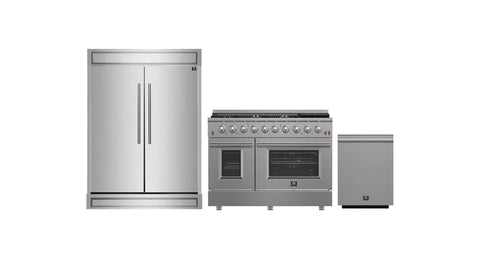
Most standard ranges are 30 inches wide, which fits the typical kitchen cutout. Compact 24-inch models suit small kitchens, and professional-style ranges come in 36-, 48- and 60-inch widths with more burners, griddles or double ovens. Measure your cutout and check your gas or electrical hookup before you order.
A Kitchen Range Isn't Your Only Option
Now that the stove vs range debate is settled, let's look at other cooking setups. A range puts everything in one appliance, but you can also split the cooktop and oven into separate appliances:
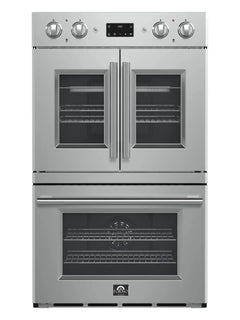
- Wall ovens are built into cabinetry, independent of the cooktop. They can be installed at a comfortable height, so there's less bending, and they come as single or double ovens. Browse wall ovens.
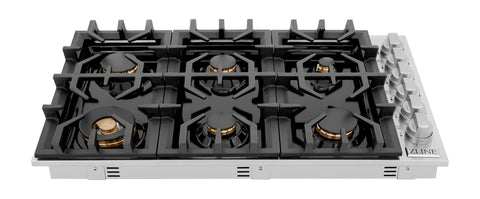
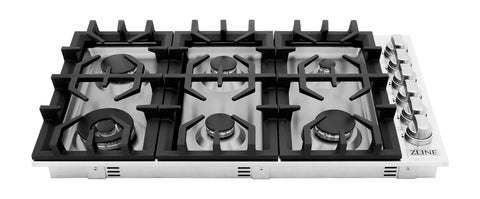
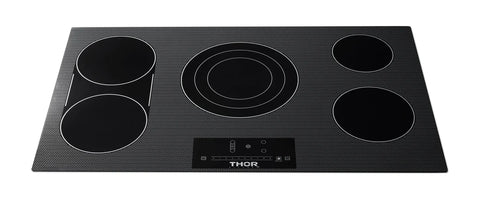
- Cooktops drop into a countertop or island, with the controls on or beside the cooking surface. They're available in gas, electric and induction, and they're a good option when you want a low-profile, streamlined look. Browse cooktops.
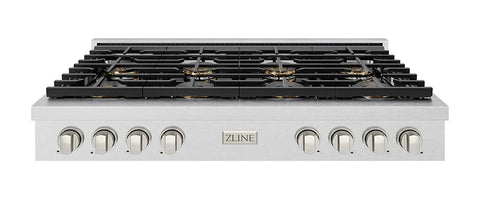
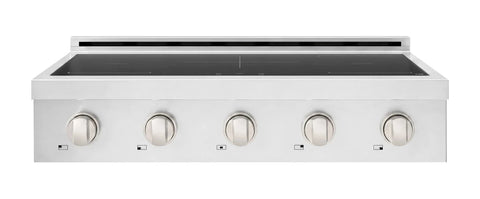
- Rangetops are pro-style burner units that slide into a countertop cutout with knobs on the front, like the top of a professional range without the oven. Browse rangetops.
Splitting the cooktop and oven takes more cabinet space and usually more installation work than a single range, but it gives you more freedom in your kitchen layout. A common remodel setup pairs a cooktop or rangetop on an island with a wall oven nearby.
| Setup | Good for | Keep in mind |
|---|---|---|
| Range (stove) | Most kitchens: one appliance, one cutout | The oven sits below the cooktop, so you bend to use it |
| Cooktop + wall oven | Islands, custom layouts and kitchens with two cooks | Two appliances to buy and install, plus cabinetry for the oven |
| Rangetop + wall oven | A pro-style look without a full range | Needs a counter cutout, and a hood sized for the burners |
Installation and Safety Basics
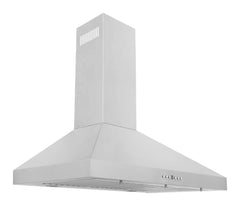
Whatever you call it, a range needs the right hookup. Gas and dual fuel ranges need a gas supply line, and electric, induction and dual fuel ranges typically need a 240-volt circuit; most gas ranges also plug into a standard 120-volt outlet for igniters, lights and controls. Have a licensed professional make gas and electrical connections, and follow the manufacturer's installation instructions, including the anti-tip bracket that ships with freestanding and slide-in ranges. Pair your range or cooktop with a range hood that's at least as wide as the cooking surface.
Choose the Cooking Appliances Right for Your Lifestyle
As you can see, "range" and "stove" describe the same appliance. The real decisions are fuel type, size, installation style and whether you want everything in one unit or separate pieces. Home Outlet Direct makes it easy to compare ranges, wall ovens, cooktops and rangetops. For a step-by-step checklist, see our kitchen range buying guide.
Comments
0 comments