





Your HVAC system is one of the most important investments in your home, controlling comfort year-round. Choose the wrong one, and you could face uneven temperatures, higher energy bills, and ongoing repairs. With the right guidance, though, you can confidently choose a system that fits your home, budget, and lifestyle.
This HVAC buying guide simplifies the process. We’ll cover system types, sizing, SEER2 efficiency, 2026 updates, and pricing so you can make a smart decision. If you’ve been weighing ducted vs ductless, mini split vs central air, or heat pump vs AC and furnace, you’re in the right place.
When you’re ready to buy, Home Outlet Direct offers a wide selection of top brands at competitive prices with fast shipping and expert support, making it easier to choose the right system without second-guessing.
Shop All HVAC Systems at Home Outlet Direct
What Is an HVAC System?
HVAC stands for Heating, Ventilation, and Air Conditioning. It’s the system responsible for keeping your home comfortable year-round, no matter the season. Instead of thinking of heating and cooling as separate pieces, an HVAC system works as a unified setup that controls temperature, airflow, humidity, and overall indoor air quality.
At its core, most HVAC systems are made up of a few key components working together:
-
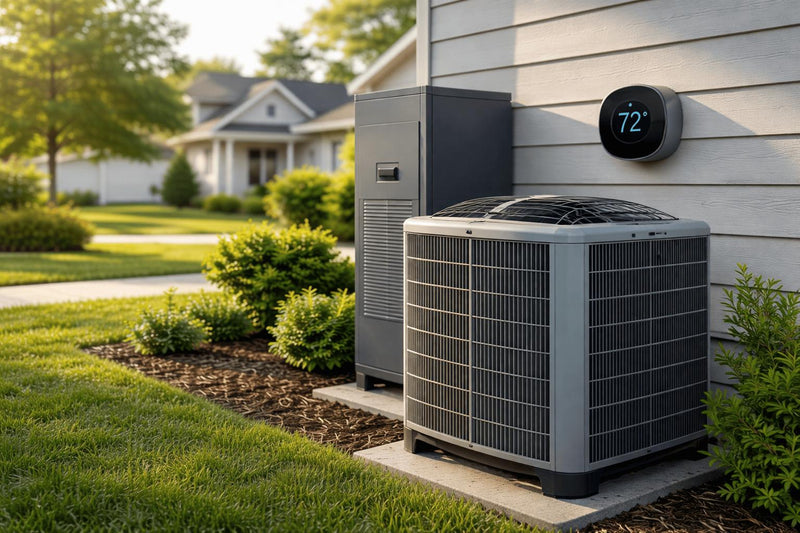
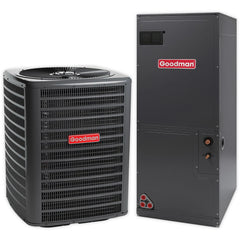
Outdoor unit (condenser/compressor): This sits outside your home and handles heat transfer, either releasing heat in the summer or pulling it in during colder months (for heat pumps).
-
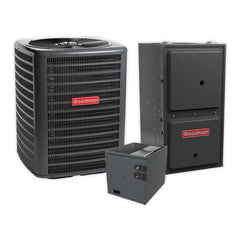
Indoor unit (air handler or furnace): This distributes conditioned air throughout your home. Air handlers are typically used with electric systems, while furnaces use gas or propane to generate heat.
-
Ductwork or refrigerant lines: Ducted systems use air ducts to move air room to room, while ductless mini splits rely on refrigerant lines connected to individual indoor units.
-
Thermostat: The control center that lets you set and maintain your desired temperature.
One of the biggest decisions you’ll make is choosing between electric and gas-powered heating. Electric systems, including heat pumps and ductless mini splits, are often easier to install and more energy-efficient in moderate climates. Gas furnaces, on the other hand, tend to deliver stronger heating performance in colder regions but require access to a gas line and proper venting. This choice can impact installation complexity, upfront cost, and long-term energy usage, so it’s worth considering early.
So who actually needs a new HVAC system? If your current setup is 13 to 15 years old, struggling to keep up, or driving up your energy bills, it’s probably time to upgrade. New systems are also essential for home remodels, new construction projects, and properties that don’t have existing ductwork. Many homeowners and landlords are also switching to newer, more efficient systems to lower operating costs and increase property value.
If you’re ready to explore options, Home Outlet Direct carries a full range of systems to match different homes and installation needs. You’ll find everything from central ducted systems and ductless mini splits to packaged units and even geothermal systems, all at competitive prices with fast shipping and support you can count on.
Browse Central Ducted HVAC Systems at Home Outlet Direct ->
Types of HVAC Systems — Which Is Right for Your Home?
Choosing between different HVAC system types is one of the biggest decisions you’ll make in this process. The right system depends on your home layout, whether you have ductwork, your budget, and how much control you want over individual room temperatures.
Here’s a quick side-by-side comparison to help you narrow things down:
|
Feature |
Central Split |
Packaged Unit |
Mini-Split (Ductless) |
Geothermal |
|
Ductwork Needed |
Yes |
Yes |
No |
No |
|
Best For |
Most homes with ducts |
Limited indoor space |
Additions, no-duct homes, zoning |
Long-term efficiency |
|
Upfront Cost |
Mid |
Mid |
Mid–High |
High |
|
Energy Efficiency |
Good |
Good |
Excellent |
Best |
|
DIY-Friendly |
No |
No |
Yes (MRCOOL DIY) |
No |
|
Zoning |
With add-ons |
Limited |
Built-in (multi-zone) |
Yes |
Now let’s break down each option so you can confidently choose the best HVAC system for your needs.
Central Split Systems
Central split systems are the most common setup in the U.S., and for good reason. They’re reliable, widely available, and designed to heat and cool your entire home through a single, connected system.
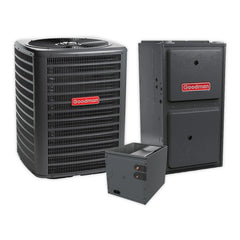
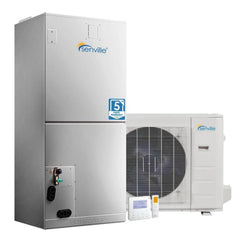
These systems include an outdoor unit that houses the compressor and condenser, along with an indoor unit that contains either an air handler or a furnace paired with an evaporator coil. The two are connected by refrigerant lines and work together to distribute conditioned air through your ductwork.
If your home already has ducts in place, this is often the most straightforward and cost-effective option. It delivers consistent, whole-home comfort and works well for families who want one system to handle both heating and cooling without managing multiple units.
Central systems are ideal for:
-
Homes with existing ductwork
-
Full-home heating and cooling needs
-
Homeowners looking for a familiar, proven solution
Shop Central Split Systems at Home Outlet Direct ->
Ductless Mini-Split Systems
Ductless mini split systems have become one of the fastest-growing HVAC solutions, especially for homes that don’t have existing ductwork or need more flexible temperature control.
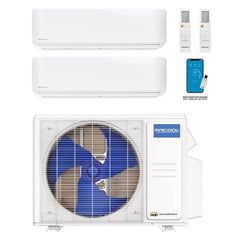
Instead of using ducts, these systems connect an outdoor compressor to one or more indoor air handlers mounted on walls or ceilings. Each indoor unit controls a specific room or zone, giving you precise control over different areas of your home.
You can choose between:
-
Single-zone systems for one room or area
-
Multi-zone systems that can support up to five rooms or more
One of the biggest advantages is efficiency. Because there’s no ductwork, you avoid energy losses that can occur in traditional systems. Many ductless mini split models offer SEER2 ratings above 20, making them a top choice for energy-conscious buyers.
And if you’re considering a DIY installation, MRCOOL stands out. Their DIY series uses pre-charged line sets, which means you don’t need a vacuum pump or HVAC certification to install it. That can save you significantly on labor costs while still getting a high-performance system.
Ductless systems are ideal for:
-
Room additions, garages, and finished basements
-
Older homes without ducts
-
Apartments and rental properties
-
Buyers who want zoning and energy efficiency
Shop Ductless Mini-Split Systems at Home Outlet Direct ->
Packaged HVAC Units
Packaged HVAC units combine all heating and cooling components into a single outdoor unit. Unlike split systems, everything is housed together, typically installed on a rooftop or a slab next to the home.
These systems still use ductwork to distribute air, but they’re especially useful in homes where indoor space is limited and there’s no room for a separate furnace or air handler.
While they don’t offer as much customization as split systems, they’re straightforward to install and replace, making them a practical option in certain layouts.
Packaged units are ideal for:
-
Homes without indoor mechanical space
-
Smaller residential properties
-
Situations where a compact, all-in-one system makes sense
Explore HVAC Packaged Units at Home Outlet Direct ->
Geothermal Heat Pumps
Geothermal systems are the most energy-efficient HVAC option available, using underground piping loops to exchange heat with the earth. Because ground temperatures stay relatively stable year-round, these systems can deliver consistent heating and cooling with minimal energy use.
The main drawback is the upfront cost. Installation requires digging or drilling to install the ground loop system, which can be a significant investment. However, for homeowners planning to stay long-term, the lower operating costs and potential energy savings can more than offset that initial expense.
Geothermal systems are ideal for:
-
Energy-conscious homeowners
-
High-usage climates with year-round heating and cooling needs
-
Long-term homeowners looking for maximum efficiency
Browse Geothermal Heat Pump Systems at Home Outlet Direct ->
Ducted vs. Ductless HVAC — Which Should You Choose?
One of the most common decisions in any HVAC buying guide comes down to this: should you go with a ducted system or a ductless mini split? The right answer depends on your home setup, budget, and how much control you want over individual rooms.
Here’s a clear side-by-side comparison to help you decide:
|
Feature |
Ducted (Central HVAC) |
Ductless (Mini-Split) |
|
Installation |
Requires ductwork |
Only small wall hole needed |
|
Whole-Home Coverage |
Yes — single system |
Zone-by-zone |
|
Energy Efficiency |
Good (duct losses possible) |
Excellent (no duct loss) |
|
Upfront Cost |
$3,000–$10,000+ installed |
$700–$5,000 (DIY possible) |
|
Aesthetics |
Hidden — vents only visible |
Wall-mounted air handler visible |
|
Best For |
Homes with existing ducts |
Additions, rentals, no-duct homes |
If your home already has ductwork in good condition, a central ducted system is usually the most practical and cost-effective choice. It allows you to reuse existing infrastructure, keeping installation simpler while delivering consistent, whole-home heating and cooling from a single system. This setup is ideal for homeowners who want reliable performance without managing multiple zones or systems.
Ductless mini splits are a better fit when ductwork isn’t available or doesn’t make sense. Instead of using ducts, they deliver heating and cooling directly into individual rooms, allowing for precise zoning and improved energy efficiency. They’re especially useful for additions, older homes, garages, apartments, and rental properties where flexibility matters. Many ductless systems also achieve higher SEER2 ratings since there’s no energy loss through ducts.
For buyers looking to save on installation, MRCOOL DIY mini splits stand out. These systems use pre-charged line sets, making them installable without specialized tools or certification. If you want a straightforward whole-home solution, ducted is the way to go. If you want flexibility, efficiency, or DIY installation, ductless is the clear winner.
Shop All HVAC Systems at Home Outlet Direct ->
How to Size Your HVAC System
Choosing the right size HVAC system is one of the most important steps in this entire process. Even the best HVAC systems will underperform if they’re not sized correctly for your home. This is where many buyers go wrong, and it’s often the reason behind high energy bills, uneven temperatures, and systems that wear out too quickly.
The goal is simple: match your system’s output to your home’s actual heating and cooling needs.
Understanding BTUs and Tonnage
HVAC capacity is measured in BTUs, or British Thermal Units. This tells you how much heating or cooling power a system can deliver.
-
12,000 BTU = 1 ton of cooling capacity
You’ll often see systems labeled in tons (like a 2-ton or 3-ton system), especially when shopping for a central HVAC system.
Getting this number right matters more than most people realize:
-
Oversized systems cool or heat too quickly, then shut off before properly conditioning the air. This leads to short cycling, poor humidity control, and unnecessary wear on components.
-
Undersized systems run constantly, struggling to keep up. That means higher energy bills and a home that never quite reaches your desired temperature.
A common starting point is:
-
About 20 BTU per square foot
But that’s just a baseline. Real-world sizing depends on several factors, which we’ll cover below.
BTU and Square Footage Sizing Guide
Use this table to get a general idea of what size system your space may need:
|
Home / Zone Size |
BTU Needed |
Tonnage |
Best System Type |
|
Up to 600 sq ft |
9,000 BTU |
0.75 ton |
Mini-split (single zone) |
|
600–1,000 sq ft |
12,000–18,000 BTU |
1–1.5 ton |
Mini-split or small central |
|
1,000–1,500 sq ft |
18,000–24,000 BTU |
1.5–2 ton |
Mini-split or central |
|
1,500–2,000 sq ft |
24,000–30,000 BTU |
2–2.5 ton |
Central split system |
|
2,000–2,500 sq ft |
30,000–36,000 BTU |
2.5–3 ton |
Central split system |
|
2,500–3,500 sq ft |
36,000–48,000 BTU |
3–4 ton |
Central split or packaged |
|
3,500+ sq ft |
48,000–60,000+ BTU |
4–5 ton |
Central split, dual system |
This table is especially helpful if you’re trying to self-qualify before shopping. For example:
-
A garage conversion or addition under 600 sq ft is usually perfect for a ductless mini split
-
A 2,000 sq ft home will typically need a 2 to 2.5 ton central system
-
Larger homes may require multi-zone systems or even dual HVAC setups
When browsing systems, this helps you quickly filter options at Home Outlet Direct and avoid wasting time on units that are too small or too large.
Other Sizing Factors That Matter
Square footage is just the starting point. Several real-world factors can increase or decrease the amount of BTU your home needs.
Climate zone
Homes in hot, humid regions require more cooling capacity, while colder climates need stronger heating performance. If you’re in a high-heat area, you may need to size up slightly.
Ceiling height
Standard calculations assume 8 to 9 foot ceilings. If your ceilings are higher, you’ll need more capacity. A good rule is to add about 10% more BTU for each additional foot of ceiling height.
Insulation quality
Well-insulated homes hold conditioned air better, which reduces the load on your system. Poor insulation can increase your required BTU by 10% to 20%.
Sun exposure
Rooms with large windows or heavy sun exposure, especially those facing south or west, tend to heat up faster. You may need to increase capacity by 10% to 15% in these areas.
While these guidelines are great for estimating, the most accurate way to size an HVAC system is with a Manual J load calculation performed by a licensed HVAC contractor.
This process evaluates:
-
Square footage and layout
-
Insulation levels
-
Window size and placement
-
Air leakage
-
Local climate conditions
If you’re investing in a full central HVAC system, this step is highly recommended to avoid costly sizing mistakes.
Shop HVAC Systems by Size & Type at Home Outlet Direct ->
Getting your sizing right puts you in a strong position to shop confidently. Once you know your target BTU or tonnage, you can narrow down your options and focus on efficiency, features, and pricing
Understanding SEER2 Efficiency Ratings (2026 Update)
SEER2 is one of the most important specs to understand when buying an HVAC system. It measures how efficiently a system cools your home over an entire season. The higher the SEER2 rating, the less energy the system uses, which means lower monthly utility bills.
Introduced in 2023, SEER2 replaced the older SEER standard with more realistic testing. As a result, the numbers may look slightly lower. For example, a 14 SEER2 system is roughly equal to a 15 SEER system under the old rating.
As of 2026, all new systems must meet updated federal efficiency standards, with 14–15 SEER2 serving as the minimum in most regions. There’s also a shift to newer, more environmentally friendly refrigerants like R-32 and R-454B, replacing R-410A. When shopping at Home Outlet Direct, you’ll find systems that already meet these updated requirements, helping ensure long-term efficiency and compliance.
Here’s how different SEER2 tiers compare so you can match efficiency to your budget and usage:
|
SEER2 Rating |
Efficiency Level |
Best For |
Cost Premium |
|
14–15 SEER2 |
Standard (2026 minimum) |
Budget buyers, mild climates |
Base price |
|
16–18 SEER2 |
Mid-Efficiency |
Most homeowners — best value |
10–20% more |
|
19–22 SEER2 |
High-Efficiency |
Hot climates, lower bills |
25–40% more |
|
23+ SEER2 |
Ultra-High / Premium |
Max efficiency, energy-focused |
50%+ more |
Higher SEER2 systems cost more upfront but lower your monthly energy bills, so the right choice depends on your climate and usage. For mild climates, 14–15 SEER2 is usually enough, while 16–18 SEER2 offers the best overall value for most homes. In hotter areas or heavy-use situations, 19+ SEER2 can deliver meaningful long-term savings.
You may also qualify for federal tax credits on high-efficiency systems, especially heat pumps, which can help offset upfront costs. Since eligibility can change, it’s worth checking current IRS guidelines before you buy.
Browse High-Efficiency HVAC Systems at Home Outlet Direct ->
Key Features to Look for in an HVAC System
Once you’ve narrowed down your HVAC system type and size, the next step is choosing the right features. This is where you separate a basic system from one that delivers better comfort, lower energy bills, and long-term reliability.
Single-Stage vs. Two-Stage vs. Variable Speed
Not all HVAC systems run the same way. The way a system cycles on and off has a big impact on efficiency, comfort, and noise.
Single-stage systems
These run at full power 100% of the time when they’re on. It’s a simple on/off setup. While they’re the most affordable option upfront, they tend to be less efficient and can create noticeable temperature swings.
Two-stage systems
These operate at two levels: high and low. Most of the time, they run at a lower setting to maintain consistent temperatures, then ramp up when needed. This improves comfort and efficiency compared to single-stage systems.
Variable speed (inverter-driven systems)
These are the most advanced. Instead of turning on and off, they continuously adjust output to match your home’s needs. That means:
-
More consistent temperatures
-
Better humidity control
-
Lower energy usage
-
Much quieter operation
This technology is standard in most ductless mini split systems and is one of the reasons they’re considered among the best HVAC systems available today.
Heat Pump vs. AC + Separate Furnace
Another major decision is how your system handles heating.
Heat pump systems
A heat pump both heats and cools your home by moving heat instead of generating it. In the summer, it removes heat from your home. In the winter, it pulls heat from outside air and brings it indoors.
They’re:
-
Highly energy-efficient
-
Ideal for mild to moderate winter climates
-
Often eligible for energy incentives
AC + gas furnace systems
This is the most common setup in the U.S. A central air conditioner handles cooling, while a gas furnace provides heat.
They’re:
-
More reliable in extreme cold
-
A strong choice for northern climates
-
Often more familiar for traditional installations
Cold-climate heat pumps (hyper heat)
Newer heat pump technology can operate efficiently in temperatures as low as -13°F. These systems can fully replace a furnace in many regions, making them an increasingly popular all-in-one solution.
Smart Thermostat Compatibility
Smart controls are no longer a luxury, they’re a practical way to reduce energy use and improve convenience.
Look for systems that are compatible with:
-
Nest
-
Ecobee
-
Honeywell
These allow you to:
-
Adjust temperature remotely
-
Set schedules based on your routine
-
Automatically reduce usage when you’re away
Many ductless mini split systems, including MRCOOL models, offer built-in app control without needing a separate thermostat. You can manage everything directly from your phone.
Smart control features can reduce energy usage by 10% to 15%, making them one of the easiest ways to save money over time.
Noise Levels
Noise is something many buyers overlook until after installation. A loud system can quickly become frustrating, especially if the outdoor unit is near a bedroom or living space.
Noise levels are measured in decibels (dB):
-
Outdoor units: Look for 55–65 dB
-
Indoor air handlers: Aim for 25–35 dB
Variable speed and inverter-driven systems are significantly quieter than single-stage systems because they don’t constantly turn on and off at full power.
Air Quality and Filtration
Your HVAC system doesn’t just control temperature, it also affects the air you breathe every day.
MERV-rated filters
Filters are rated by MERV (Minimum Efficiency Reporting Value). Higher ratings capture more particles like dust, pollen, and allergens.
Advanced air quality features
Some systems include built-in enhancements like:
-
UV air purification
-
Dehumidification modes
-
Fresh air ventilation
These features can make a noticeable difference, especially for households with allergies, pets, or high humidity.
Shop HVAC Accessories at Home Outlet Direct ->
How Much Should You Spend on an HVAC System?
One of the biggest questions buyers have is simple: how much should you actually spend on an HVAC system? The answer depends on your home size, system type, efficiency goals, and whether you plan to install it yourself or hire a contractor.
Below is a clear breakdown of what you can expect at each price tier for equipment-only costs. Keep in mind that professional installation is a separate expense, which we’ll cover right after.
|
Budget Tier |
Price Range (Equipment) |
What You Get |
Best For |
|
Budget |
$700–$1,500 |
Single-zone mini split or basic central; standard SEER2 |
Rentals, small spaces, tight budgets |
|
Mid-Range |
$1,500–$3,500 |
Multi-zone mini split or 2–3 ton central; 16–18 SEER2; smart thermostat ready |
Most homeowners — best value |
|
Premium |
$3,500–$7,000+ |
High-capacity central or multi-zone; 19+ SEER2; variable speed; smart features |
Larger homes, energy-focused buyers |
|
Luxury / Geothermal |
$7,000–$20,000+ |
Geothermal heat pump, ultra-high SEER2, full zoning, whole-home smart control |
Long-term investment, max efficiency |
At the budget level, you’ll find single-zone mini splits or basic central systems that handle essential heating and cooling but lack advanced features. Mid-range systems are the most popular, offering better efficiency (typically 16–18 SEER2), improved comfort, and smart thermostat compatibility. Premium systems step up to 19+ SEER2, variable speed performance, and enhanced comfort, while high-end geothermal and ultra-efficient systems focus on maximum long-term energy savings.
Keep in mind that equipment pricing doesn’t include installation, which typically adds $1,500 to $5,000 or more depending on system type and complexity. One major way to save is with MRCOOL DIY mini splits, which are designed for homeowner installation and can eliminate most labor costs.
Home Outlet Direct helps you get more value at every price tier with competitive pricing, trusted brands like MRCOOL, fast shipping, and reliable support, making it easier to find the right system without overspending.
Shop HVAC Systems by Budget at Home Outlet Direct ->
Best HVAC Brands at Home Outlet Direct
Choosing the right HVAC system isn’t just about specs. The brand you go with plays a big role in reliability, ease of installation, and long-term performance. At Home Outlet Direct, you’ll find a curated selection of trusted HVAC brands that balance quality, efficiency, and value across every price tier.
Here’s a closer look at the top options.
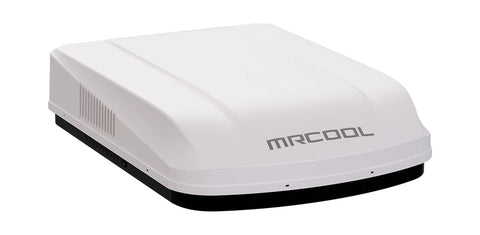
MRCOOL
MRCOOL has quickly become one of the most popular HVAC brands in the country, especially for homeowners looking for a simpler, more affordable installation process.
What sets MRCOOL apart is its focus on DIY-friendly ductless mini split systems. Their signature No-Vac Quick Connect line sets come pre-charged with refrigerant, which means you don’t need specialized tools, vacuum pumps, or HVAC certification to install them. That alone can save thousands in labor costs.
Their latest 5th Generation DIY systems take things even further with:
-
Smartphone app control right out of the box
-
High efficiency ratings ranging from 15 to 22 SEER2
-
Hyper-heat performance that works in colder climates
-
Quiet, inverter-driven operation for consistent comfort
If you’re looking for a more traditional setup, MRCOOL also offers the Advantage series, which delivers pro-grade performance at a lower equipment cost for contractor-installed systems.
You’ll find MRCOOL systems in:
-
Single-zone configurations for one room
-
Multi-zone systems that can handle up to 5 rooms or more
For homeowners, DIYers, landlords, and remodelers, MRCOOL is one of the best HVAC systems available today in terms of flexibility, efficiency, and overall value.
If you’re ready to compare options, you can shop all MRCOOL systems at Home Outlet Direct and find the right setup for your space.
Shop All MRCOOL Systems at Home Outlet Direct ->
Goodman
Goodman is one of the most recognized names in residential HVAC, known for producing dependable, American-made central HVAC systems at competitive price points.
These systems are widely used by contractors across the country because they offer a strong balance of performance, reliability, and affordability. If you’re installing or replacing a ducted system, Goodman is often one of the most practical choices.
Key advantages of Goodman systems include:
-
Proven reliability in whole-home heating and cooling
-
Strong warranty coverage for added peace of mind
-
A wide range of tonnages to match different home sizes
-
Solid efficiency options across multiple SEER2 levels
For homeowners with existing ductwork who want a straightforward, cost-effective solution, Goodman delivers consistent results without overcomplicating the setup.
You can shop all Goodman systems at Home Outlet Direct to find central split systems sized for your home and budget.
Shop All GOODMAN Systems at Home Outlet Direct ->
Other Brands
In addition to MRCOOL and Goodman, Home Outlet Direct carries a rotating selection of HVAC brands across ducted, ductless, and packaged system categories. This gives you more flexibility to compare features, pricing, and availability based on your specific needs.
Inventory can vary, so it’s worth browsing the full collection to see what’s currently available, especially if you’re looking for specific configurations or efficiency levels.
To explore everything in one place, you can browse all HVAC brands at Home Outlet Direct and compare systems side by side.
Browse All HVAC Brands at Home Outlet Direct ->
Common HVAC Buying Mistakes to Avoid
Even with a solid understanding of HVAC system types and features, it’s easy to make a few costly mistakes during the buying process. Avoiding these common pitfalls can save you thousands of dollars, prevent installation headaches, and ensure you end up with a system that actually performs the way you expect.
Here’s what to watch out for:
-
Buying the Wrong Size: Incorrect sizing leads to poor comfort, higher energy bills, and system wear. Always base your choice on square footage, climate, ceiling height, and insulation, and consider a professional load calculation. Home Outlet Direct’s guides and support can help you dial this in.
-
Ignoring Electrical Requirements: Most systems require a 240V dedicated circuit. Confirm your panel capacity, breaker space, and wiring compatibility before buying to avoid delays or added costs.
-
Choosing the Lowest SEER2 to Save Upfront: Lower efficiency units cost less initially but can drive up long-term energy bills. In warmer climates especially, higher SEER2 systems often pay for themselves over time.
-
Skipping the Heat Pump Option: Many buyers overlook heat pumps, which can handle both heating and cooling efficiently. Modern cold-climate models can replace traditional furnace setups in many homes.
-
Forgetting Refrigerant Compliance: As of 2026, systems must use R-32 or R-454B refrigerants. Avoid outdated R-410A units to ensure compliance and long-term serviceability.
-
DIY Without Proper Research: MRCOOL DIY mini splits are install-friendly, but most HVAC systems require licensed professionals. Improper installs can void warranties and reduce performance.
-
Skipping Ventilation Planning: Without proper ventilation, humidity and air quality issues can strain your HVAC system. Add-ons like range hoods and ventilation systems help maintain performance.
-
Use the Right Resources Before You Buy: Take advantage of Home Outlet Direct’s product listings, live chat support, and buying guides to verify specs and make a confident, informed purchase.
Why Buy Your HVAC System from Home Outlet Direct?
-
Why Where You Buy Matters: The right retailer can save you money, simplify the process, and help you choose the right system with confidence.
-
Wide Selection, All in One Place: Compare central systems, ductless mini splits, packaged units, and geothermal options without jumping between multiple stores.
-
Top Brands at Competitive Prices: Access trusted brands like MRCOOL at below-MSRP pricing, so you get contractor-grade equipment without retail markups.
-
Fast Shipping, No Delays: Get your system delivered quickly, avoiding long wait times and backorders common with big-box retailers.
-
Warranty and Expert Support: Live chat and expert guidance at 800-495-0144 help with sizing, compatibility, and product selection before and after purchase.
-
Built for Confident Buying: Detailed product listings and in-depth guides make it easier to compare options and make informed decisions.
Ready to Find Your Perfect HVAC System?
Browse All HVAC Systems at Home Outlet Direct ->
Final Checklist Before You Buy
Before you hit “add to cart,” take a minute to run through this final checklist. This is your quick sanity check to make sure everything lines up so you can buy with confidence and avoid surprises during installation.
-
System type chosen: central split, ductless mini-split, packaged, or geothermal
-
Correct BTU/tonnage: sized for your square footage, ceiling height, and climate zone
-
Ducted vs. ductless confirmed: based on your home’s existing infrastructure
-
SEER2 rating selected: aligned with your climate and long-term energy goals
-
Fuel type decided: electric heat pump or gas + electric split system
-
Electrical requirements verified: 240V dedicated circuit available and compatible
-
Smart features planned: thermostat compatibility or built-in app control (like MRCOOL)
-
Refrigerant compliance confirmed: system uses R-32 or R-454B for 2026 standards
-
Installation plan set: DIY (MRCOOL) or licensed HVAC contractor scheduled
-
Budget finalized: system tier selected and preferred brand shortlisted
If you can confidently check every box above, you’re in a strong position to make the right purchase the first time. When you’re ready, you can browse HVAC systems at Home Outlet Direct and move forward knowing you’ve covered every detail that matters.
Shop HVAC Systems Now at Home Outlet Direct ->
FAQs About Buying an HVAC System
What type of HVAC system is best for most homes?
A central split system is the best choice for most homes with existing ductwork because it provides efficient, whole-home heating and cooling from a single system. If your home doesn’t have ducts, a ductless mini-split, especially MRCOOL, offers better efficiency, flexible zoning, and easier installation. You can explore both options when you browse HVAC systems at Home Outlet Direct.
What is the difference between a heat pump and an air conditioner?
An air conditioner only cools your home, while a heat pump both heats and cools by transferring heat in or out depending on the season. This makes heat pumps a more versatile and often more energy-efficient solution, especially in mild to moderate climates. If you’re considering an upgrade, it’s worth comparing heat pump systems at Home Outlet Direct alongside traditional AC setups.
What SEER2 rating should I look for in 2026?
At minimum, choose a system that meets the 2026 federal standard, which is typically 14 SEER2 in most regions. For the best balance of cost and efficiency, 16–18 SEER2 is ideal for most homeowners. In hotter climates, investing in 19+ SEER2 can significantly reduce long-term energy costs, and you can compare these options when you shop high-efficiency HVAC systems at Home Outlet Direct.
Can I install a mini-split myself?
Yes, but only certain models are designed for DIY installation. MRCOOL DIY mini splits use pre-charged line sets, so you don’t need a vacuum pump or HVAC certification. Traditional mini splits and all central HVAC systems should still be installed by a licensed professional, and you can find DIY-ready options when you shop MRCOOL systems at Home Outlet Direct.
How much does a new HVAC system cost?
Equipment costs typically range from $700–$1,500 for single-zone mini splits, $1,500–$4,000 for mid-range central systems, and $4,000–$10,000+ for premium or large-capacity systems. Professional installation usually adds another $1,500–$5,000 depending on complexity. If you want to save on labor, you can look into DIY mini split systems at Home Outlet Direct.
How long does an HVAC system last?
Most central HVAC systems last 15–20 years with proper maintenance. Ductless mini splits generally fall in the same range, while geothermal systems can last even longer, with indoor components exceeding 25 years and ground loops lasting 50+ years. Choosing a quality system from a trusted retailer like Home Outlet Direct helps ensure long-term performance.
What refrigerant do 2026 HVAC systems use?
As of 2026, all new HVAC systems use low-GWP refrigerants like R-32 or R-454B, replacing the older R-410A standard. This is part of updated federal regulations focused on environmental impact. Any system you purchase from a reputable source like Home Outlet Direct will already meet these requirements, so you can shop confidently knowing your system is compliant.
Find Your Perfect HVAC System at Home Outlet Direct ->